
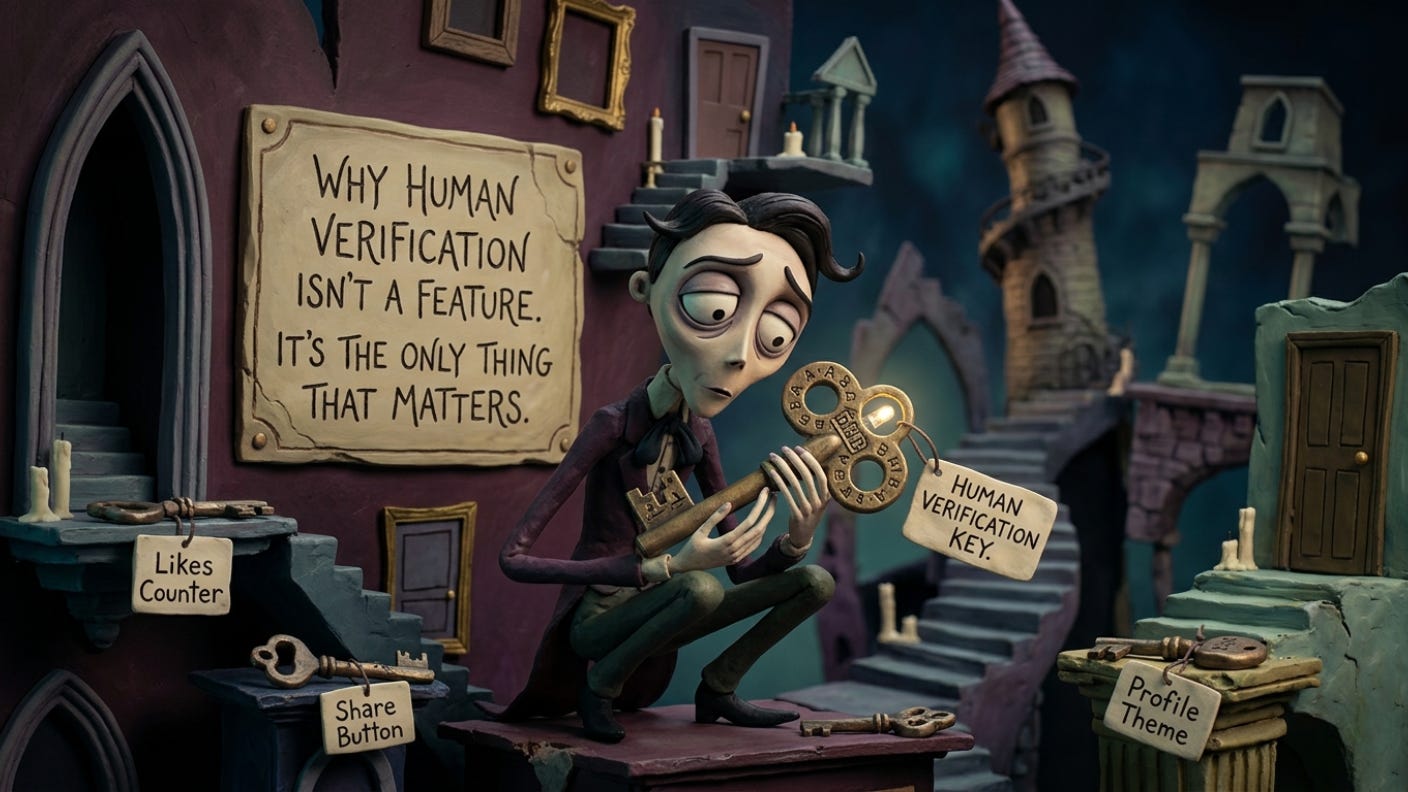
Why human verification isn't a feature. It's the only thing that matters.
In a world drowning in AI-generated content, the question legal professionals need to ask about any intelligence source isn't "how fast is it?" It's "can I trust it?"

There is no shortage of AI-powered tools claiming to monitor the legal landscape. Search any combination of “AI legal intelligence” or “regulatory monitoring platform” and you will find no shortage of products, each promising comprehensive coverage, real-time updates, and intelligent analysis.
Most of them have a problem they don’t like to talk about.
The problem is trust. Specifically: when you receive a summary of a regulatory development, a case update, or a policy change from an AI-powered system, how confident are you that it is accurate? That it hasn’t hallucinated a detail, mischaracterised a ruling, or missed a qualification that changes the entire significance of the development?
For most knowledge work, an 85% accuracy rate is impressive. For legal advice, it is professionally dangerous. The margin between those two positions is where Thelonious was built.
The hallucination problem in legal intelligence
The legal profession is already acutely aware of the AI hallucination problem. The Payne v. The State case — in which fictitious AI-generated case citations made it into a court filing — is the most visible recent example. But the problem extends beyond citations. AI systems can mischaracterise the scope of a ruling, attribute significance to a development that doesn’t warrant it, or miss a jurisdictional nuance that changes everything.
In most information contexts, this is an inconvenience. In legal contexts, it is a liability. A lawyer who acts on inaccurate intelligence — whether from a hallucinating AI system, an out-of-date newsletter, or a misread regulation — bears the professional consequences. The tool does not.
This is why the question of verification is not a secondary concern for legal intelligence. It is the primary concern. The most comprehensive, fastest, most beautifully designed intelligence platform in the world is worthless — or worse, actively dangerous — if the information it provides cannot be trusted.
Every week, our ICYMI briefing distils the most significant developments into a format that takes five minutes to read and saves hours of research.
Subscribe below — it’s free.
What human verification actually means
Human verification is not a marketing term at Thelonious. It is a process. Every piece of intelligence on the platform — every case summary, every regulatory update, every enforcement action — goes through human review before it is made available to users. That review is conducted by people with legal backgrounds who understand not just whether a summary is technically accurate, but whether it captures the significance of what it describes.
The result is intelligence that legal professionals can use directly — in client briefings, in advice, in strategic planning — without the additional step of independently verifying every claim. The primary source is always linked. The analysis is always checked. The confidence level is, by design, the kind that legal professionals require.
This is a more expensive and slower process than purely automated intelligence generation. It is also, for any legal professional who has considered the alternative carefully, the only responsible approach.
The practical implication
When an IP lead at a major law firm forwards a Thelonious intelligence summary to a client, they are not forwarding an AI output. They are forwarding a human-verified analysis that they can stand behind professionally. When an in-house GC uses Thelonious data to inform a board-level briefing on AI compliance exposure, they are working from a source they can cite with confidence.
That is the practical implication of human verification. Not just better information, but information you can use in the places that matter — the client meeting, the advice note, the boardroom. That is what Thelonious was built to provide.
We think legal professionals deserve nothing less.
See the difference for yourself
Book a 20-minute demo and we'll show you exactly what human-verified AI law intelligence looks like in practice.